5 Risky Wellness Trends Doctors Want You to Avoid
5 Risky Wellness Trends Doctors Want You to Avoid
By Stephanie Brown
Fact checked by Jennifer Klump
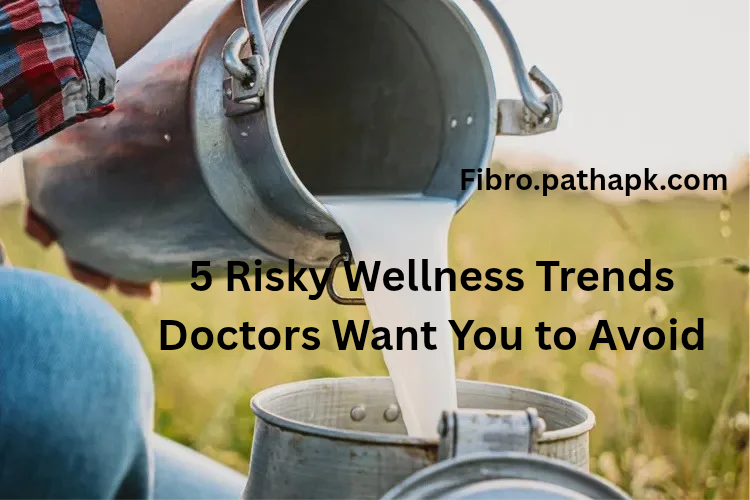
Milk being poured from a metal container into another in an outdoor setting
Raw milk is among some of the most dangerous health trends this year.
Social media is filled with wellness advice, but not all of it is backed by science. While some viral health trends are harmless—or simply ineffective—others can put your health at serious risk.

We asked doctors and registered dietitians to weigh in on the most dangerous wellness trends circulating online and why you should just scroll right past them.
1. Bee Venom Therapy
Bee venom therapy is an alternative therapy that has been studied as a potential anti-inflammatory treatment for autoimmune diseases.1 Some wellness influencers swear that self-administered bee venom therapy—placing bees on their backs and getting stung—works as a natural treatment for Lyme disease.
“Unfortunately, this can be very dangerous as there is no standardized dosing, preparation, or administration protocol to guide this form of therapy. Allergic reactions and anaphylaxis have been reported in patients using bee venom therapy. Of the limited studies looking into this therapy, none have demonstrated benefit, and some have shown serious risks,” Christian Nageotte, MD, an allergist and immunologist at Henry Ford Health, told Verywell in an email.
2. Supplement Stacking
Supplement stacking is a popular wellness trend that encourages people to take multiple dietary supplements for specific health purposes. You can easily find recommendations for optimized supplement stacks on Reddit and TikTok, and many wellness influencers sell specific stacks.
But supplement stacking is a very concerning current wellness trend, according to Rachel Pessah-Pollack, MD, an endocrinologist and physician nutrition specialist at NYU Langone Health.
“This can be very risky: stacking can result in unintentional levels of vitamins that are too high and can even reach toxic levels. For example, someone may take a multivitamin, a hair, skin, and nails supplement, a sleep supplement, and a separate vitamin D product without realizing they are repeatedly taking Vitamin D in multiple forms. Too much vitamin D can lead to high calcium levels and kidney problems, and should be avoided,” she told Verywell in an email.
Related Stories
‘Boy Kibble’ Is the Latest High-Protein Trend—Here’s How to Make It Healthier
A plate of rice mixed with ground meat and herbs
Parasite Prevention, ‘Gut Reset’ Dinners—and 3 More Health Tips This Week
A person clutching their abdominal area while seated on a sofa indicating discomfort or pain
3. Cutting Out Carbs Completely
Carbohydrates have been demonized in popular culture since the Atkins Diet was touted as a low-carb weight loss diet.
“While carbohydrates tend to get a negative reputation, they are an essential part of a balanced eating pattern and do not need to be eliminated,” Madison Clarke, RDN, LD, a registered dietitian at UAB St. Vincent’s, told Verywell in an email.
Our bodies rely on carbohydrates as a primary energy source. Carbohydrate needs can vary, but people following a 2,000-calorie diet need about 275 grams per day.2
It’s really concerning to see people believe that it is “healthy” to avoid carbs, Clarke said.
“A lot of this fear comes from oversimplified messaging that labels carbs as ‘good’ or ‘bad,’ when in reality there is an important distinction between highly refined carbohydrates and more fiber-rich, minimally processed sources,” Clarke added.
4. Raw Milk
Health Secretary RFK Jr. and many wellness influencers have been promoting raw, or unpasteurized, milk as more nutritious, but this has not been proven.
Pasteurization kills germs such as Salmonella, E. coli, and Listeria that can cause foodborne illnesses.3
“Pasteurization does not significantly reduce the nutritional value of milk, including protein and calcium content, but it does greatly improve safety by destroying dangerous microorganisms. Research has also failed to show that raw milk improves lactose intolerance, allergies, or immune function,” Jake Howman, MS, RDN, LD, an oncology dietitian at The Ohio State University Wexner Medical Center and James Cancer Hospital, told Verywell in an email.4
Pasteurization helped make milk one of the safest foods in our food supply and dramatically reduced milk-related infectious diseases, he added.
5. Vaccine Avoidance
The COVID-19 pandemic led to a resurgence in vaccine hesitancy and skepticism, and a recent KFF report showed that childhood vaccination rates have been declining.5
A growing distrust in vaccine safety may explain the drop, KFF, a non-profit health policy organization, suggested in the report.
Another potential concerning contributor: the increased distrust of scientific institutions and health care professionals, Edward Sheen, MD, MPH, MBA, a chief quality and population health executive at L.A. Care Health Plan, told Verywell in an email.
You can see this distrust manifested in the “rise in vaccine hesitancy and avoidance, despite vaccines saving millions of lives and being among the most effective public health interventions ever developed,” he said.