Is anyone taking Tonmya? It’s the new drug for fibromyalgia, has just been FDA approved.
New Hope in Fibromyalgia Treatment: Understanding Tonmya
by Rebecca Handler
New Hope in Fibromyalgia Treatment: Understanding Tonmya
Fibromyalgia has long been a frustrating condition for both patients and doctors. It causes widespread pain, poor sleep, exhaustion, “fibro-fog” (trouble with memory and concentration), and many other symptoms that make daily life difficult. Millions of people live with fibromyalgia, yet treatment options have been limited—and many patients don’t find enough relief.

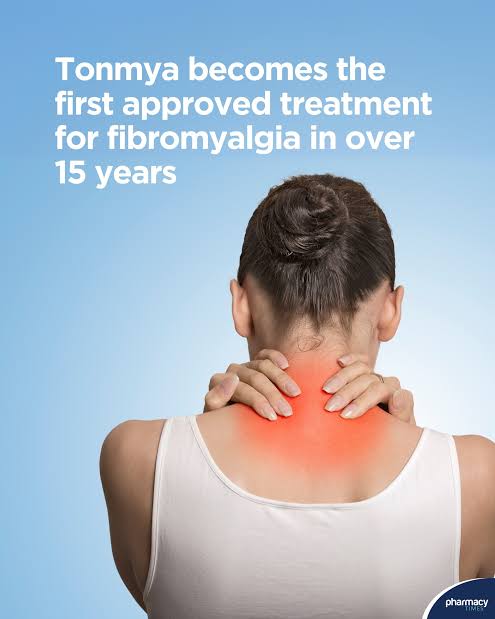
That’s why the FDA’s recent approval of Tonmya (cyclobenzaprine HCl sublingual tablets) on August 15, 2025, is such an important milestone. It’s the first new medication specifically approved for fibromyalgia in more than 15 years.
We want to explain what Tonmya is, what the research shows, and what this means for people living with fibromyalgia.
What Is Tonmya?
How it works: Tonmya is a small tablet placed under the tongue before bedtime. This allows it to be absorbed more quickly than a traditional pill that goes through the stomach and liver.
Why this matters: The design may reduce some side effects seen with older versions of the drug.
What it does: Tonmya helps improve deep, restorative sleep, which can in turn reduce pain, fatigue, and other symptoms.
Tonmya is not an opioid. It is taken once daily at night, usually starting with a lower dose for two weeks before increasing.
What Did the Clinical Trials Show?
Tonmya was studied in large trials with about 1,000 participants. Here’s what researchers found after three months of use:
Pain relief: Many people reported less daily pain.
Meaningful improvement: More participants taking Tonmya had at least a 30% drop in pain compared to those taking a placebo (inactive pill).
Better sleep and energy: Improvements were also seen in sleep quality, fatigue, and overall functioning.
Side effects: Most were mild and temporary, including numbness or tingling in the mouth, unusual taste, fatigue, dry mouth, or drowsiness.
Why This Approval Matters
A long wait: No new fibromyalgia drugs have been approved in over 15 years.
Focus on sleep: Poor, unrefreshing sleep is a core part of fibromyalgia. By improving sleep, Tonmya may also ease pain and fatigue.
Non-opioid option: It offers a new approach without the risks tied to opioids or heavy sedatives.
Broad benefits: Because fibromyalgia affects many areas of life, a treatment that helps with more than just pain is especially welcome.
Things to Keep in Mind
Not a cure: Tonmya can help, but it won’t eliminate symptoms for everyone.
Modest effect: Improvements were real but sometimes small. Some people may not notice much change.
Unanswered questions: We need more data on long-term safety and who benefits most.
Access and cost: As with any new drug, insurance coverage may take time to catch up.
Most importantly, Tonmya is likely to be part of a toolbox of treatments and not a replacement for other helpful strategies like gentle exercise, pacing, sleep hygiene, and management of other health conditions.
What This Means for the Fibromyalgia Community
For many people living with fibromyalgia, Tonmya represents hope: hope for better sleep, less pain, more energy, and a higher quality of life.
At BHC, we view this as a reminder of the importance of ongoing research. People with fibromyalgia deserve new, effective, and well-tolerated treatments. We’ll be watching closely to see how Tonmya works outside of clinical trials and how patients and doctors adapt to using it.
If you or someone you love tries Tonmya, share your experiences with us. Together, we can continue to push for progress and improve care for all those living with fibromyalgia.
New Hope in Fibromyalgia Treatment: Understanding Tonmya
The following information was added on July, 17, 2026
Cyclobenzaprine has been available as a generic drug for decades, and was initially FDA approved for muscle spasms in 1977 as Flexeril (now discontinued as a Brand Name Drug). It is available as 5 mg, 7.5 mg and 10 mg immediate release tablets, and 15 mg and 30 mg Extended Release (ER) capsules.
Fibromyalgia has long been a challenging condition for both the individuals who suffer and clinicians alike. Characterized by widespread pain, nonrestorative sleep, fatigue, cognitive difficulties (commonly referred to as “fibro-fog”), and a host of associated symptoms, the disorder affects millions of people in the U.S. and globally. Treatment options have historically been limited, and many patients report inadequate relief.
On August 15, 2025, the U.S. Food & Drug Administration (FDA) approved a new treatment: Tonmya (cyclobenzaprine HCl sublingual tablets), marking the first new FDA-approved drug for fibromyalgia in more than 15 years.
Bateman Horne Center (BHC) is proud to have served as a study site, enrolling participants in the pivotal trials that led to this FDA approval. We believe it’s important to understand what Tonmya is, how it works, what the clinical trials show, and what it may mean in practice, both its promise and its caveats.
About Tonmya
Active ingredient & formulation: Tonmya is cyclobenzaprine hydrochloride, delivered in a sublingual tablet (i.e., under the tongue).
Dosage: The approved dosing starts at 2.8 mg nightly (sublingual) for the first 14 days, then increases to 5.6 mg nightly thereafter in individuals who tolerate the initial dose and do not have contraindications. For certain populations (e.g., elderly or with hepatic/liver impairment), a lower dose (2.8 mg) is maintained.
Nonopioid, once-daily bedtime therapy.
Mechanism and design features:
Because it’s sublingual, the hope is for more rapid absorption (transmucosal) and reduced first-pass metabolism in the liver, which in turn can lower levels of a long-half-life metabolite (norcyclobenzaprine) that might contribute to side effects.
Cyclobenzaprine belongs to a family of medicines called tricyclics (named for their three-ring chemical structure). Instead of acting on just one pathway, it interacts with several different types of receptors in the brain and nervous system. These include receptors for serotonin (5-HT₂A), which are linked to mood and pain signaling; adrenergic receptors (α₁), which influence arousal and stress responses; histamine receptors (H₁), which affect sleep and wakefulness; and muscarinic receptors (M₁), which are involved in memory and other nervous system functions.
By lightly blocking or modulating these receptor systems, cyclobenzaprine may help improve the quality of deep, restorative sleep, dampen pain signals, and, in turn, reduce the broad cluster of fibromyalgia symptoms.
What the Clinical Trials Show
Tonix Pharmaceuticals conducted several Phase 3 trials, notably RELIEF and RESILIENT, to test Tonmya’s safety and efficacy in fibromyalgia.
Key findings:
Pain reduction: Across ~1,000 participants in the two pivotal trials, Tonmya significantly reduced daily pain scores compared to placebo at 14 weeks.
Clinically meaningful improvement: A greater percentage of participants achieved at least a 30% improvement in pain at three months with Tonmya versus placebo.
Improvements were also seen in sleep disturbance, fatigue, and overall fibromyalgia symptoms/function. Because sleep disruption, especially nonrestorative or fractured sleep, is considered to exacerbate pain and other symptoms, this is a meaningful component.
Tolerability & side effects: Tonmya was generally well tolerated. The most common side effects included:
Oral hypoesthesia (numbness in the mouth)
Oral discomfort, abnormal product taste
Fatigue, dry mouth, somnolence
Oral paresthesia (tingling/burning in the mouth)
What Makes Tonmya Different / Why It Matters
From the perspective of fibromyalgia science and care, there are several reasons this approval is a significant advance:
The long gap in new treatments. For over 15 years, there have been no new FDA-approved drugs specifically for fibromyalgia. The options available (e.g., pregabalin, duloxetine, milnacipran) help many but leave many others with inadequate relief.
Targeting nonrestorative sleep. Poor, fragmented, or nonrestorative sleep is a core component of fibromyalgia pathology. It often worsens other symptoms. Tonmya’s design (bedtime dosing, sublingual delivery) directly addresses this aspect. If improving sleep helps reduce pain and fatigue, that could yield compound benefits.
Nonopioid profile with possibly improved tolerability. For those wary of sedatives, heavy systemic side effects, or long-lasting metabolites, Tonmya’s route and lower metabolite load are potentially advantageous.
Scope of symptom relief. Because fibromyalgia is multidimensional (pain + sleep + fatigue + cognitive difficulties + mood), a therapy that yields improvement across several domains, (not just pain), is particularly welcome.
Caveats, Considerations, and Unanswered Questions
While Tonmya is promising, it is not a cure-all. As with all new treatments, it’s important to consider limitations and what remains to be understood.
Effect size: The pain reductions, while statistically significant, are modest in many cases. Not every user will achieve large improvements. Some may get little benefit. This is common in fibromyalgia treatments, given patient heterogeneity.
Long-term safety: The trials are relatively short (14 weeks for primary endpoints). We need more real-world data over longer periods, in more diverse populations, to assess sustained efficacy, safety, and tolerability.
Who responds best? Given the variability of fibromyalgia, the drug might work better in people whose symptoms are dominated by sleep disruption, or those who are early in disease course, etc. Identifying predictors of response will be clinically useful.
Cost, access, insurance coverage. New drugs often face delays or limitations in coverage. Patients should, when possible, discuss insurance, out-of-pocket cost, and whether their provider is familiar with prescribing Tonmya.
Complementary vs replacement. Tonmya is likely to be an additional tool in the therapeutic toolbox, not a wholesale replacement of other therapies. Integrative approaches (medications, sleep hygiene, physical activity, cognitive strategies, management of comorbidities) remain essential.
What This Means for the Fibromyalgia Community
For many, the approval of Tonmya represents hope for better nights, less unrelenting pain, more energy, and improved daily functioning. For BHC, it underscores the importance of continued fibromyalgia research: individuals living with this life-altering condition deserve newer, more effective, and better tolerated treatment options.
At BHC, we will be watching closely as Tonmya enters clinical practice: observing how it performs outside clinical trials, how patients and doctors adapt to the new therapy, and how access issues evolve.
We welcome this development and look forward to hearing from our community about experiences with Tonmya. In the meantime, we encourage patients to stay informed, continue advocating, and remain engaged in evidence-based