It’s Not A Fibromyalgia
Is Fibromyalgia an Autoimmune Disease?
Medically reviewed by Nicholas R. Metrus, MD
What Is Autoimmunity?
Is Fibromyalgia an Autoimmune Disease?
What Research Says
Key Takeaways
Some researchers believe fibromyalgia might be an autoimmune disease because people with it have high levels of certain autoantibodies.
A study injected mice with antibodies from people with fibromyalgia, and the mice then showed similar symptoms, like pain and nerve issues.
Researchers are exploring new drugs that might help treat inflammation and nerve damage found in fibromyalgia.
Some research suggests FM may be an autoimmune disease involving inflammation and nerve damage. However, the hypothesis is not yet widely accepted in the medical field.1
What Is Autoimmunity?
Autoimmunity occurs when your immune system mistakenly attacks healthy cells, causing damage, inflammation, or disease. Normally, the immune system targets invaders like viruses, bacteria, and cancer cells. In autoimmunity, it misidentifies healthy tissues as threats and tries to destroy them.
Autoimmune diseases can affect single or multiple organs. Examples of organ-specific autoimmune diseases include:
Autoimmune thyroid disorders
Type 1 diabetes
Psoriasis
Multiple sclerosis (MS)
Guillain-Barré syndrome (GBS)
Systemic autoimmune diseases can cause different issues, as their effects are felt throughout the body. Examples include:
Systemic lupus erythematosus (lupus)
Rheumatoid arthritis (RA)
Inflammatory bowel disease (IBD)
Sjögren’s disease (SjD)
Antiphospholipid syndrome
Symptoms of autoimmune diseases vary widely depending on the organ(s) affected. However, some symptoms are common among many disorders. General symptoms may include:2
Fatigue
Low-grade fever (often a fever that comes and goes)
Weight changes
Dizziness
Muscle and/or joint pain and swelling
Difficulty concentrating
Skin rashes
Digestive issues
A general feeling of being unwell
Symptoms may worsen, improve, and then worsen again in an unpredictable manner.
Is Fibromyalgia an Autoimmune Disease?
For decades, fibromyalgia’s very existence was controversial. But not anymore. Early on, some doctors who believed in FM classified it as “arthritis-like.”3
Many medical experts suspected that fibromyalgia might be autoimmune because it shares similarities with diseases like lupus, Sjögren’s disease, rheumatoid arthritis, and multiple sclerosis.
However, early research failed to turn up the hallmarks of autoimmune disease, including:
Damage from the immune system attack
Inflammation as part of the immune and healing processes
Autoantibodies (immune system proteins that target a part of your body)
Later, FM was considered a pain condition that was believed to be neurological or neuroimmune. The term central sensitivity syndrome developed as an umbrella term for FM and related illnesses, including myalgic encephalomyelitis/chronic fatigue syndrome (ME/CFS), irritable bowel syndrome (IBS), and migraine.
Now, FM is seen as a complex, multi-symptom illness. What’s more, some evidence suggests it isn’t actually missing those hallmarks of autoimmunity:4
Damage? Yes, small-fiber neuropathy.
Inflammation? Yes, in the brain and nerves of the spinal cord (central nervous system).
Autoantibodies? Yes, several of them.
What Research Says
Fibromyalgia has always borne a striking resemblance to autoimmune diseases.
Research published in 2019 laid out the many factors they have in common:4
They’re often triggered by trauma and infection.
Various pathogens may increase your risk (Epstein-Barr virus, herpes simplex virus, hepatitis C).
They can develop soon after vaccination, silicone breast implantation, or mineral oil injection.
They’re more common in women.
They involve genetic differences known to predispose you to autoimmunity.
They often occur alongside other autoimmune diseases.
Evidence shows activation of the adaptive immune system.
Autoantibodies
Researchers believe they may have found the smoking gun of autoimmunity in FM as well. They discovered that several autoantibodies were unusually high in people with FM, including those for:
Serotonin: A neurotransmitter (chemical messenger) and hormone known to be dysregulated in FM4
Gangliosides: A type of molecule in the brain linked to several neurodegenerative conditions, including Alzheimer’s disease, Parkinson’s disease, and amyotrophic lateral sclerosis (ALS)5
Phospholipids: Molecules that make up protective barriers around cells and regulate certain cellular processes
Smooth muscle: Muscles located in organs, under involuntary control
Striated muscle: Skeletal muscles, under voluntary control
Moisture-producing glands: The same autoantibodies as in Sjögren’s disease which affect moisture-producing glands in the mucous membranes that line organs and the inside of your body
Thyroid gland: The same autoantibodies as in Hashimoto’s thyroiditis, an autoimmune thyroid disease4
None of these were found in every person with FM. Rates ranged from about 19%6 to 73%.4
Gangliosides may be an important aspect of FM autoimmunity. They’re believed to be involved in small-fiber neuropathy.7
Autoantibody Rates, FM Studies
Serotonin 73%
Gangliosides 71%
Phospholipids 54%
Smooth muscle 55%
Striated muscle 40%
Sjögren’s antibodies 32%
Thyroid gland 19%
*Among those with Sjögren’s disease
Giving Fibromyalgia to Mice
In a groundbreaking 2021 study, researchers took antibodies (immunoglobulin G, IgG) from people with FM and injected them into mice. The mice then:1
Developed hypersensitivity to pain and cold
Became less active
Lost paw grip strength
Lost nerve fibers in the skin
Researchers say the FM IgG appeared to target white-matter brain cells (glia), gray-matter brain cells (neurons), and certain nerve fibers. This shows how immune system activity can cause neurological symptoms.
The ability to transfer FM like this is nothing short of revolutionary. On top of providing evidence about what’s causing symptoms, it could point to new diagnostic tests and treatments.1
Diagnosis and Treatment
If more research validates findings of autoimmunity in fibromyalgia, it could lead to diagnostic tests. Because fibromyalgia is currently a diagnosis of exclusion, that would be an important change.
A 2022 study focused on identifying biomarkers for diagnosing and managing fibromyalgia, found that study participants with FM had elevated levels of 19 inflammatory serum proteins, indicating widespread inflammation.8
Many immunosuppressive drugs for autoimmune diseases are already on the market. That greatly expands treatment options, especially since the drugs could be used off-label right away.
Whether current immunosuppressants are safe and effective for FM remains to be seen.
Neuroinflammation
Several studies have now confirmed neuroinflammation in fibromyalgia. Some also have looked at where it is in the brain and what may be driving it.
Inflammation is a complex immune response to injury and infection. It’s a necessary function. But when it becomes chronic, inflammation causes tissue damage. It’s especially harmful to the nervous system.9
Areas Impacted by Neuroinflammation in Fibromyalgia
Verywell / Shideh Ghandeharizadeh
The nervous system and immune system work together to create neuroinflammation. FM research links several cells and one molecule to the process.
Neurological components include:
Microglia: A type of cell that’s part of the nervous system’s dedicated immune system9
Astrocytes: Cells of the brain and spinal cord involved in information processing and implicated in neurodegenerative disease10
Oligodendrocytes: White-matter cells that form myelin sheaths around nerves and regulate neuronal circuits9
Brain-derived neurotrophic factor (BDNF): A key molecule involved in learning and memory, also tied to aging and brain-related disease11
Immune system components include:
Mast cells: A type of white blood cell that helps keep the immune system in balance9
Chemokines: Immune cells that attract white blood cells to sites of infection12
Pro-inflammatory cytokines: Immune system proteins that drive the inflammatory response13
Interleukins: Proteins that regulate immune response12
Tumor necrosis factor alpha (TNFα): A type of cytokine involved in inflammation and cell death11
Macrophages: Tissue-resident immune cells usually found at the site of infection
T-cells: Specialized immune cells that target proteins identified (or misidentified) as foreign14
A 2021 study looked at where brain inflammation is in FM.15 Researchers found several areas with abnormal inflammation compared with healthy people in the control group.
Some of these areas play roles in functions that are often dysregulated in people with FM. They include:15
Primary somatosensory cortex: Processes physical sensations, especially touch
Primary motor cortex: Skilled movement
Superior frontal gyrus: Higher cognitive function and working memory
Left superior parietal gyrus: Attention, spatial perception
Left precuneus: Memory-based tasks, episodic memory recall
Left medial frontal gyrus: Development of literacy
They also found abnormally low inflammation-related activity in the:15
Medulla: Relays messages between the brain and spinal cord, regulates cardiovascular and respiratory systems (heart and lungs)
Amygdala: Drives the stress and fear response (fight-or-flight)
Left superior temporal gyrus: Language processing, remembering what you’ve just heard
Neuroinflammation in the amygdala, left medial frontal, and left superior parietal gyri was associated with higher pain scores. Neuroinflammation in the left amygdala, left medial frontal, and left superior frontal gyri was associated with higher stress responses, which included measures of fatigue, tension, frustration, depression, somatization, and aggression.15
A Different Type of Inflammation
Neuroinflammation has different effects than “typical” inflammation in the joints and soft tissues. Typical inflammation causes pain in many conditions, such as arthritis and multiple sclerosis.
When tissues expand beyond their normal size, they cause pain by putting pressure on surrounding structures. Arthritic fingers hurt because they’re inflamed.
Neuroinflammation doesn’t cause the same issues. Instead, it causes neurological problems that lead to neurological symptoms.
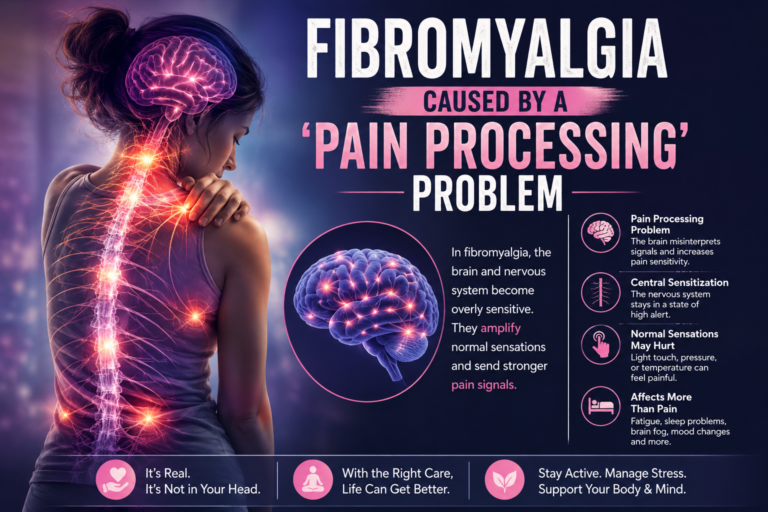
FM pain is believed to come from central sensitization, which is a heightened response to pain in the central nervous system. Research suggests neuroinflammation is behind central sensitization.16
So, regardless of neuroinflammation, your FM pain isn’t caused by tissue inflammation and therefore can’t be treated in the same way.
Inflammatory markers for fibromyalgia tend to be slightly elevated. However, the cells and molecules involved in the neuroinflammation of FM may provide new diagnostic markers to look for.
Diagnosis and Treatment
Drugs that suppress microglia and astrocytes may be useful for treating neuroinflammation. They include:
Low-dose naltrexone (LDN)
Acetazolamide
Zirgan (ganciclovir)17
Rifadin (rifampin)18
Enbrel (etanercept)19
Precedex (dexmedetomidine)20
Delsym/Robitussin (dextromethorphan)21
Propentofylline (an experimental drug)
Minocin (minocycline)
Cannabidiol (CBD)11
P2X7R inhibitors (experimental drugs)22
Other existing treatments for neuroinflammation include:
Tricyclic antidepressants, including amitriptyline and nortriptyline23
Low-dose corticosteroids
Nutritional supplements, including vitamin B12
Hormonal supplementation, including oxytocin, human growth hormone, and human chorionic gonadotropin24
Muscle relaxants: Tonmya (cyclobenzaprine)
Several other drugs are under development for neuroinflammation, most of them developed as potential Parkinson’s disease treatments. Anti-inflammatory drugs are often prescribed for neuroinflammatory diseases as well. However, they’ve historically been considered ineffective for FM pain.
Small-Fiber Neuropathy
Small-fiber neuropathy (SFN) is nerve damage that’s only in the small sensory nerves of the skin.25 It’s probably best known in association with type 2 diabetes.
As in FM, the pain comes and goes and is described as:26
Stabbing
Burning
Tingling
Itchy
Also like FM, SFN involves the abnormal pain types hyperalgesia and allodynia. Hyperalgesia makes your pain signals more intense, basically “turning up the volume” of pain. Allodynia makes things hurt that shouldn’t, like a loose waistband or a hand rubbing lightly against your skin.26
SFN and fibromyalgia also have these symptoms in common:26
Pain triggered by heat or cold
Urinary problems
Bowel problems
Periodic rapid heartbeat
Dry eyes and/or mouth
Abnormal sweating
Orthostatic intolerance (dizziness from a sharp drop in blood pressure upon standing)
FM research suggests some damaged nerves are part of anti-inflammatory processes. That provides another explanation for neuroinflammation.4
Typical SFN vs. Fibromyalgia SFN
In most SFN, pain begins in the feet and then moves upward. It’s been thought that only a small percentage of SFN begins with body-wide pain.26 The association between SFN and FM, which by definition includes body-wide pain, could change that belief.
Diagnosis and Treatment
The typical diagnostic test for SFN is a skin punch biopsy. A small amount of skin is removed with a circular tool and examined under a microscope. The focus is on nerve fiber density in the skin.
SFN is treatable, and small nerves continue to grow throughout life. That means they can repair the damage.27
Standard SFN treatments are already heavily used for fibromyalgia. They include:
Anti-seizure medications: Lyrica (pregabalin), Neurontin (gabapentin)
Serotonin-norepinephrine reuptake inhibitors: Cymbalta (duloxetine), venlafaxine
Tricyclic antidepressants: Amitriptyline, nortriptyline, desipramine
In a pilot study, treatment with intravenous immunoglobulin (IVIg) has been shown to improve SFN in FM. This treatment is known to be effective against autoimmune-related neuropathy. Biopsies confirmed that nerves showed less damage after treatment.28
Ganglioside autoimmunity may suggest treatment options as well. Gangliosides are suspected of being involved with diabetes-related small-fiber neuropathy. Some early animal research has suggested that ganglioside-targeted treatments may improve neuropathic pain.7
Currently, researchers are working on drugs called ganglioside GM3 synthase inhibitors.29 Evidence suggests that these may work as both oral medication and topical treatments.7