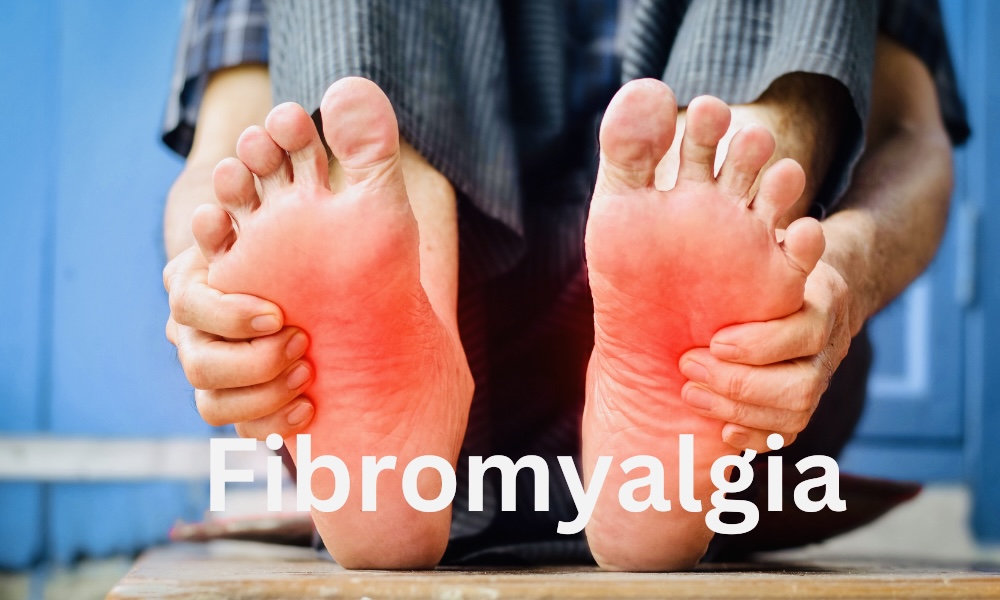
Research on foot pain in fibromyalgia is emerging, but the exact causes remain uncertain. However, some potential causes are being explored.
Foot Pain in Fibromyalgia
About 50% of people with fibromyalgia report pain in one or both feet.
Foot pain can make walking difficult and lead to more problems like back or hip pain.
Soft, well-cushioned slippers and thick socks can help ease foot pain.
Fibromyalgia can cause foot pain, affecting about half of those with the condition. Understanding its impact and exploring relief options can help manage this challenging symptom.
A person rubbing their feet in pain
Foot Pain Symptoms
All pain is unpleasant, but foot pain can significantly impact your life since walking is essential.
Some people describe it as:
“The bottoms of my feet felt like they were on fire. These pains come and go, sometimes [lasting] for months.”
“I can’t wear a flip flop or any kind of shoe.”
“I can’t stand to touch my bare feet to the floor. I have to wear memory foam slippers around the house.”
During a flare of foot pain, you may find that just resting your foot on the floor causes burning pain. Shoes can hurt not only on the soles of your feet but the tops as well. Walking? Agony. Stepping on something like an electrical cord can feel like you’re being cut by a razor blade. A common complaint is waking up with feet that feel like you’ve been walking for hours.
Foot pain is a major problem. When every step is agony, it makes it hard to do much of anything. When you’re already limited because of fibromyalgia, you hardly need one more thing to keep you from doing what you want or need to do.
What Causes Foot Pain?
Research on foot pain in fibromyalgia is emerging, but the exact causes remain uncertain. However, some potential causes are being explored.
A study published in Arthritis Research & Therapy found that about 50% of people with fibromyalgia report pain in one or both feet. That seems like a lot of us, but the same study showed that 91% have neck pain and 79% experience hip pain. In fact, the feet were among the least likely places to hurt.1
Still, it’s important to look at foot pain because your ability to walk has a big impact on how functional you can be. Foot pain can make you walk differently, which may lead to back, hip and knee problems.
Research lead by Ginevra Liptan, M.D., may shed light on one possible cause of our foot pain. It suggests that fibromyalgia involves inflammation of the fascia, which is a thin layer of connective tissue that runs throughout your entire body.2 If the word “fascia” reminds you of “plantar fasciitis,” there’s a good reason.
Plantar fasciitis is a common cause of foot pain involving a band of fascia that runs along the bottom of your foot, helping support the arch. We don’t know anything for sure yet, but some people speculate that plantar fasciitis is a symptom of common overlapping condition with fibromyalgia.
Another common condition in us, which also involves the fascia, is myofascial pain syndrome. It involves small, ropy nodules in the fascia called trigger points, which can be painful and may also cause what’s called referred pain, which is felt away from the trigger point.
In a 2016 study published in Pain Medicine, researchers say that pushing on trigger points reproduced foot pain in participants. They also found high sensitivity to pressure in the plantar region of the foot.3
Also in 2016, the journal Foot published a study suggesting that the subtalar joint, which is just below the ankle, is frequently dysfunctional in fibromyalgia. Out of 20 women who participated, 12 had hypermobility (excessive range of motion) in that joint, while five had hypomobility (limited range of motion).4
However, a 2017 study in Foot found no abnormalities in the joints of the feet, ankles, or legs of 50 people with fibromyalgia.5 We’ll need more research in this area to know for sure whether we’re more especially likely to have joint problems that could contribute to foot pain.
It’s also possible that, for some, foot pain is caused purely by fibromyalgia. Nerves are highly sensitive, and few areas take a beating like the feet. It stands to reason that they could hurt “just” because the nerves get riled up.
Your foot pain may also come from an overlapping pain condition such as:
Rheumatoid Arthritis
Lupus
Raynaud’s Syndrome
No matter the cause of foot pain, fibromyalgia amplifies it, just as it does with all pain.
Easing Your Foot Pain
When foot pain is caused by an injury or an overlapping condition, your healthcare provider can help you find the right treatment. Otherwise, you’ll need to find ways to manage it.
The following is a list of things that have helped some people with these conditions ease their foot pain (remember that these are only personal experiences and they might not work for you):
Soft, well-cushioned slippers
Thick socks or diabetic socks
Soft-soled shoes
Soaking in hot water and Epsom salts
Gentle stretching
Extremely gentle massage
Cooling lotion
Orthotics
A 2012 study on custom orthotics suggested that they may help people with fibromyalgia function better overall. (It did not look specifically at foot pain.)6
Foot pain can also come from a lot of other sources that have nothing to do with fibromyalgia. If you have foot pain that is persistent or limits your ability to function, be sure to talk to your healthcare provider about it and don’t just assume it’s part of your fibromyalgia. It’s likely to take some time and experimentation to find the best way(s) to relieve your foot pain.